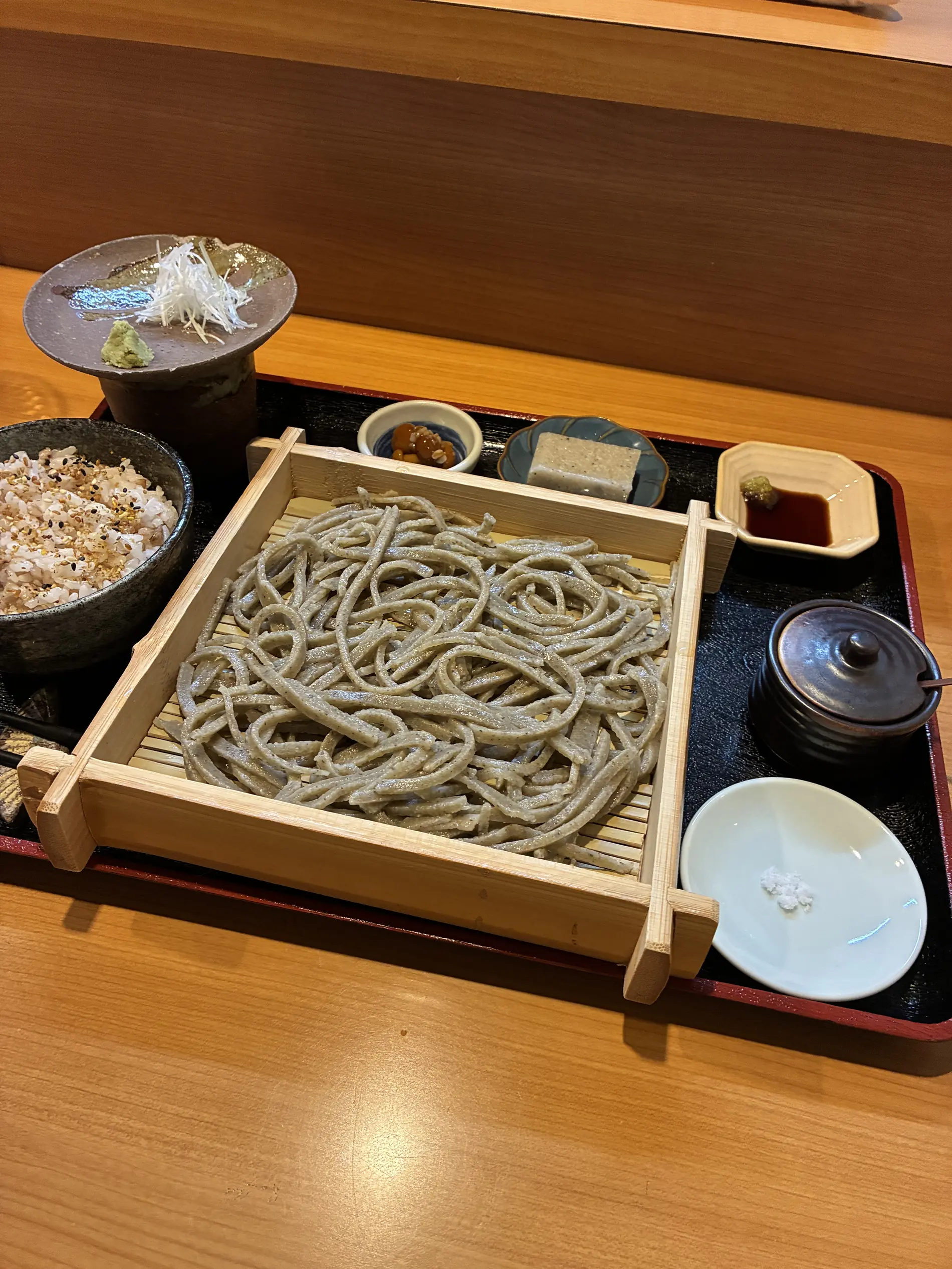
Nomi, Ishikawa — Stone-milled, hand-cut soba
滝Ground fresh, every single morning.
Whole buckwheat from Ono in Fukui, stone-ground and hand-cut the same day. Tasted first with a pinch of salt, then with house dipping broth — served in local Kutani porcelain. Limited daily; once it's gone, it's gone.
Hours11:30 – 14:30 (until sold out)
ClosedTue & Fri
From JAISTapprox. 10–15 min by car
Tel+81 761-58-1528
01
The Craftこだわり
Cooked to order, served one tray at a time — the work of an owner who travelled to over 400 soba houses across the three Hokuriku prefectures before training at the one that convinced him.
The buckwheat is whole grain from Ono in Fukui. Early each morning it is stone-ground by hand, then cut by hand — which is exactly why the aroma of the buckwheat itself rises off the plate. Try the first bites with salt, then with the house broth, and enjoy the brief, clean slip down the throat.
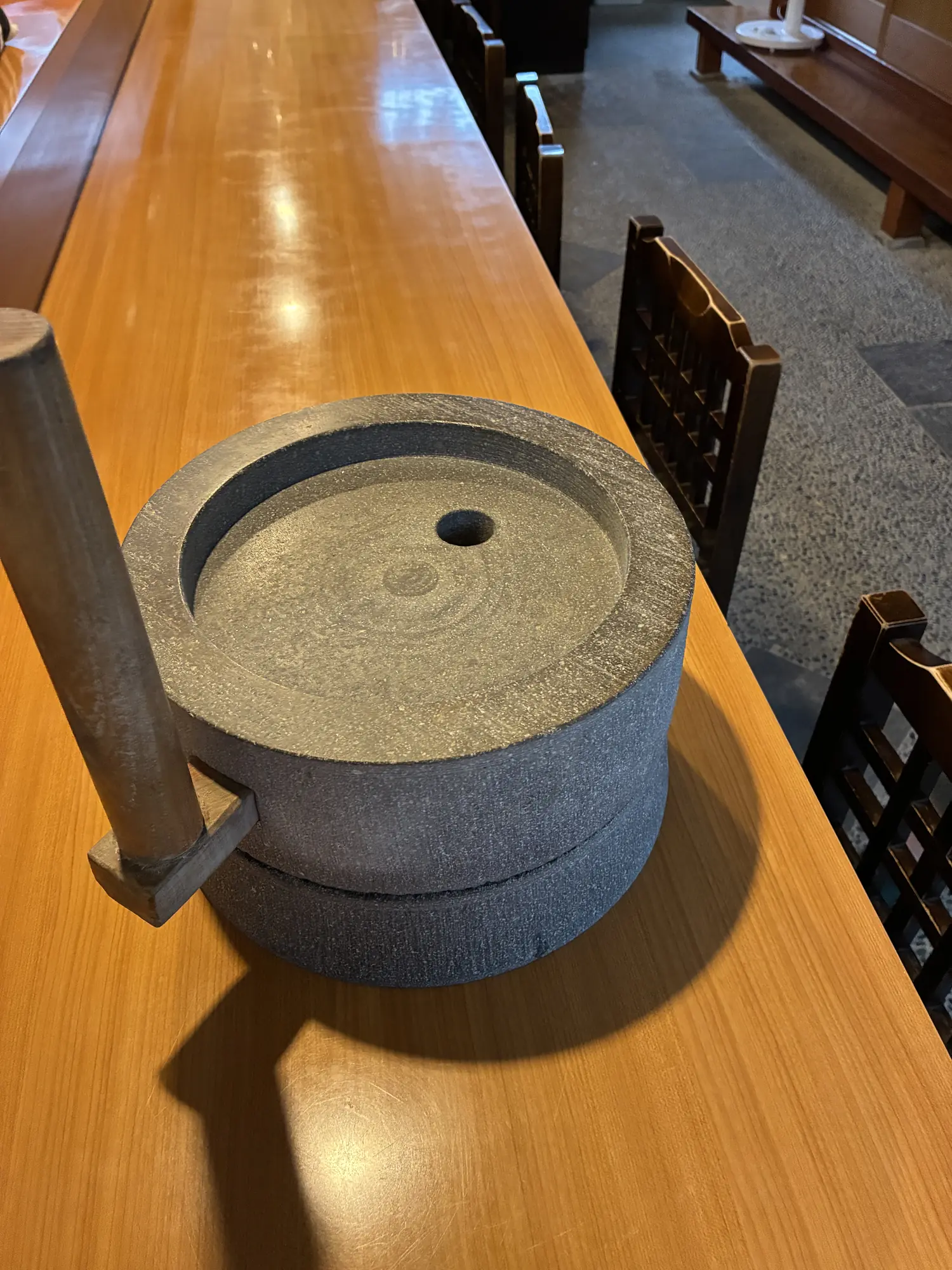
- IStone-milled by hand
The day begins by grinding whole buckwheat on the stone mill. - IIWhole buckwheat from Ono, Fukui
Usually nihachi (80/20); some days fully juwari (100% buckwheat). - IIIServed in Kutani-ware
Plated in the vivid local porcelain of Nomi. - IVTartary buckwheat tea
A toasty, caffeine-free cup while your soba is boiling.
Grinding, by hand
“Once it leaves the pot, soba changes by the minute — the surface dries, the aroma and the slip fade. So please, eat the noodles first, ahead of anything warm.”
— the owner
03
How to Enjoyはじめての方へ
01
Salt first, then broth
Take the first couple of bites with just a little salt to meet the buckwheat itself. Then dip lightly into the broth — coat the bottom third of the noodles, not the whole bunch.
02
Slurping is welcome
Pulling air in with the noodles lifts the aroma and is completely normal here. Eat soon after it arrives — fresh soba is at its best in the first few minutes.
03
Finish with sobayu
At the end you may be offered sobayu, the warm water the soba was cooked in. Pour it into the leftover broth and sip it as a gentle, nutty finish.
Dietary notes
Vegetarian & allergies
The noodles themselves are simply buckwheat and water. However, the dipping broth and most warm dishes are made with katsuo (bonito) dashi — that is, fish. If you avoid fish, the “Taki Soba” (¥970), eaten with salt only, is a lovely fish-free way to taste the buckwheat, and the tartary buckwheat tea is plant-based and caffeine-free.
This is a small, traditional kitchen, so please tell the staff about any allergies (buckwheat, egg, etc.) or dietary needs when you order — they will do their best to help. Note the shop is not halal-certified.
04
Accessアクセス
| Name | Soba Taki (蕎麦処 滝) |
|---|---|
| Address | Ni-30-1 Miyatake-machi, Nomi, Ishikawa |
| Tel | +81 761-58-1528 |
| Hours | 11:30 – 14:30 (limited daily — until sold out) |
| Closed | Tuesday & Friday (open on public holidays; closed the following Monday instead) |
◎About 10–15 minutes by car from JAIST (Japan Advanced Institute of Science and Technology). A destination soba house that draws visitors from across Japan.
Open in Google Maps